
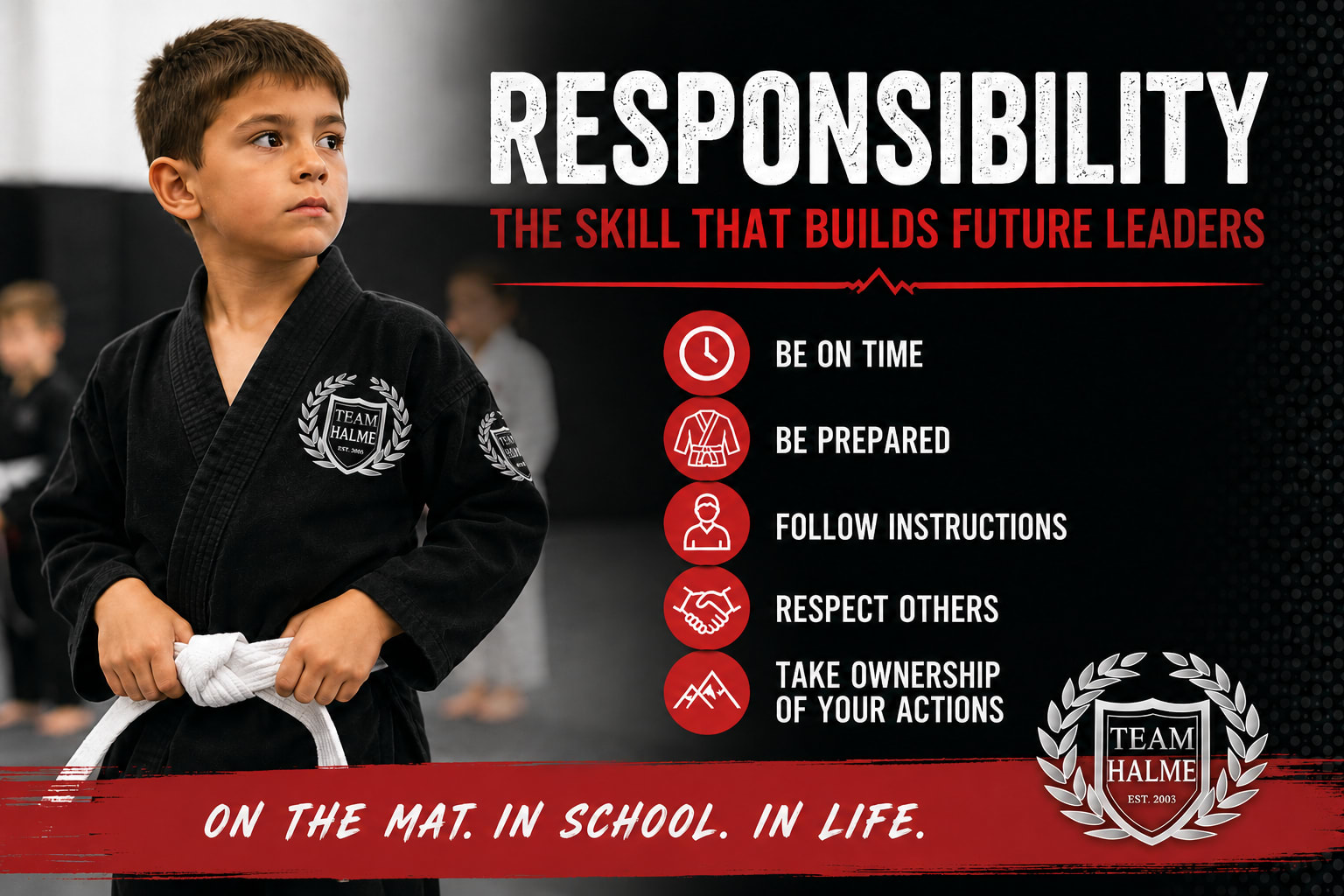
At Peak Performance, we believe martial arts is about much more than punches, kicks, and submissions. Our goal is to help students develop the character traits they need to succeed both on and off the mat. This month, our Life Skill focus is Responsibility.
Responsibility is one of the most important traits a child can develop because it teaches them that their actions matter. Responsible children learn to follow through on commitments, take ownership of their choices, and become people others can depend on.
What Does Responsibility Mean?
Responsibility means doing what you're supposed to do, even when no one is watching. It means taking ownership of your actions, completing tasks you've been given, and understanding that your choices have consequences.
For children, responsibility can look like:
- Completing homework without constant reminders
- Taking care of personal belongings
- Helping with household chores
- Being prepared for school and activities
- Following through on commitments
- Admitting mistakes and learning from them
These may seem like small actions, but they build habits that last a lifetime.
How Martial Arts Teaches Responsibility
Martial arts naturally provides opportunities for students to practice responsibility every week.
Students learn to:
- Arrive to class on time
- Bring their uniform and equipment
- Listen carefully to instructions
- Practice skills outside of class
- Treat teammates and instructors with respect
- Take ownership of their progress
As students advance through the ranks, they begin to understand that improvement doesn't happen by accident. Success comes from consistent effort, good choices, and personal accountability.
A belt isn't earned because of luck. It's earned because a student takes responsibility for their training.
Why Responsibility Matters Beyond the Mat
As children grow, responsibilities increase. School assignments become more challenging. Sports teams expect commitment. Future employers look for people they can trust. Strong relationships require reliability and accountability.
Children who learn responsibility early are better prepared for these challenges because they understand that their actions directly impact their results.
Instead of blaming others or making excuses, responsible individuals learn to ask:
- What could I have done better?
- What can I learn from this?
- How can I improve next time?
These are powerful questions that lead to growth and success.
How Parents Can Reinforce Responsibility at Home
One of the best ways to develop responsibility is to give children opportunities to practice it.
Consider encouraging your child to:
- Make their bed each morning
- Pack their own martial arts gear
- Complete daily chores
- Keep track of personal items
- Help prepare for family activities
- Follow through on commitments without reminders
Remember, responsibility isn't about perfection. Mistakes will happen. The goal is helping children learn to take ownership and make better choices moving forward.
Building Strong Habits One Day at a Time
Responsibility isn't developed overnight. It's built through small, consistent actions repeated over time.
Every time a child completes a task, keeps a promise, or takes ownership of a mistake, they strengthen this important life skill.
At Peak Performance, we're proud to partner with parents in helping students become confident, capable, and responsible leaders. We look forward to seeing our students put this month's life skill into action both on and off the mat.
Together, we're building more than martial artists—we're building future leaders.